Holiday Gifting: Keep It Local, Keep It Delicious!

It's been a minute since I've done a holiday guide here at Good Stuff NW, so I thought I'd take the opportunity to put in a word for giving the cold shoulder to the big box stores and giant online retailers, and instead spend your dollars where they'll do the most good—in your local community!

Especially this year, local retailers and vendors like those at your farmers' markets are seeing a significant drop in sales, with many wondering how they'll stay in business past the end of the year. And it's not just economic instability that's keeping people from opening their wallets, or the uncertainty over health care costs or the effect of tariffs on our monthly budgets. Those serving our immigrant neighbors are hardest hit since many of their regular customers are afraid to venture out for fear of getting detained, or worse, by ICE.

So think small and local for the holidays this year, and use the suggestions below to start your own lists.

Giving gifts produced here teaches about our regional bounty and supports local makers.

Foodstuffs from our fields. Your local farmers' market is the place to start, with vendors offering a plethora of products featuring the bounty from our fields and pastures. Whether that's jams and jellies bringing memories of warm summer days, zingy hot sauces and flavorful condimentsbeef jerky or snack sticks from cattle raised on green pastures, grains and beans grown by farmers committed to regenerative practices, farmstead cheeses made with milk from animals living with the sun on their backs and their feet in grass, or hazelnuts and honey from farmers just down the way, you can get creative and put together a basket of goodies, just wrap a pair of items or stuff them in stockings. Or you can generously give the gift of a seasonal CSA that will provide a whole season's worth of vegetables, meats and fish, fruit or flowers to your favorite family.

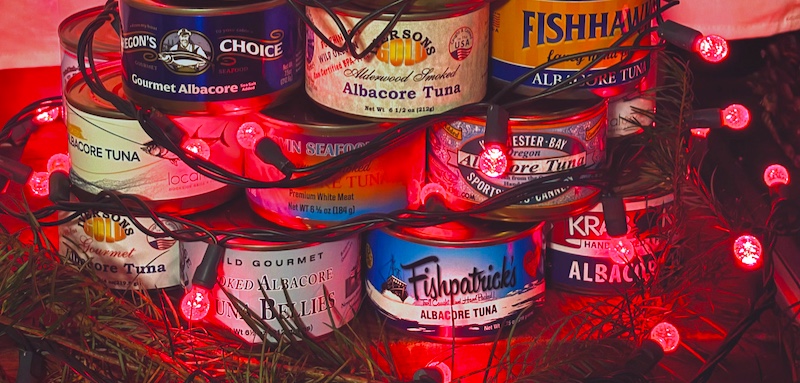
Tinned fish caught right off our coast is perfect for gifts or stocking stuffers.

Fish from our rivers and oceans. Tinned fish is having a moment right now, and there's nothing like fish that's processed within hours of being pulled from the waters off our coast. Most folks don't know that the big brands not only use fishing methods that destroy ocean habitat and pull in literally tons of by-catch (non-target fish populations) but often cook the fish twice in processing, which is why they have to add water or oil to keep it moist (ick!). Many of our small processors catch fish one at a time with a hook and line, then pack the fish fresh and only cook it once during canning, sealing it in it's own natural juices. I always have a case on hand, and you can order direct from micro-canneries like the ones listed at the Oregon Albacore Commission. (P.S. Those famous bright yellow tins of tuna from Spain? A lot of it is Oregon albacore that is shipped across the world, processed, then shipped back here. Crazy! Read more here.)

Books for cooks are always high on my list of great gifts!

Books, new or used! Most of us have talked with younger relatives or friends' kids about books we loved at their age. Have you considered giving those books to them for the holidays, especially if the topic is one that you share an interest in? For instance, my nephew was deeply fascinated with the history of World War Two, so I gifted him a copy of Howard Zinn's foundational A People's History of the United States that gives a perspective on our history that he might not find in other sources.

If someone on your list is a budding cook, you can find new and used cookbooks at Powell's, of course, but how about a combo gift of a (gently) used cookbook and a piece of cookware from the delightful collection at Kitchen Culture on Southeast Foster Road? Or give a gift certificate for one of the classes it features on knife skills, pasta making, fermentation or canning? (Read more about this unique shop.)

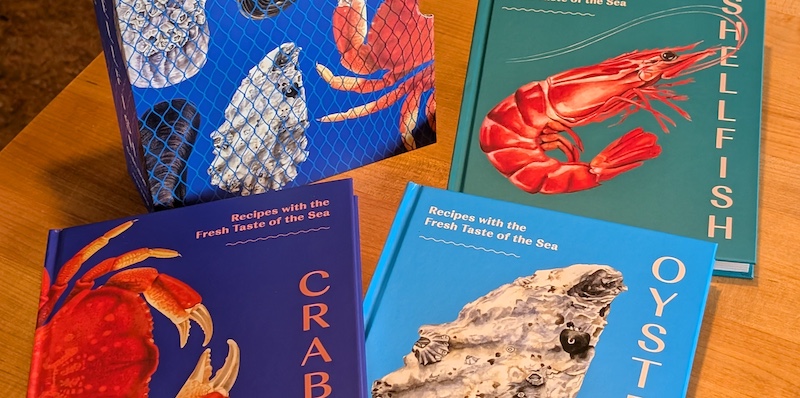
I'd be remiss if I didn't mention my friend Cynthia Nims's gorgeous, just-published Essential Shellfish Collection, a special edition, three-book box set of Cynthia's popular books on Pacific Coast shellfish cookery, containing titles on Crab, Oysters, and Shellfish. The description says it all: "If you dream about perfectly prepared crab cakes, showstopping lobster dinners, and joyful clambake celebrations, this endlessly giftable cookbook set is for you."

Hopefully this short list will get you thinking of your loved ones and what they would truly cherish, and better yet the gifts that benefit our local community. Stay tuned for Part Two of this guide coming next week!


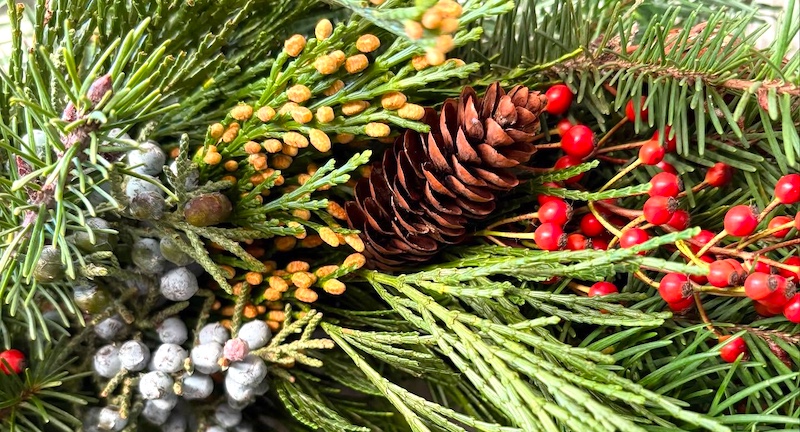
Photos: Detail of wreath from Maggy's Farm in Oregon City available from their farmstand and the Oregon City Farmers Market (top); Santa cow and friend at TMK Creamery and Distillery in Canby; tinned fish tower from Oregon's Choice Gourmet Albacore in Corvallis; Essential Shellfish box set by Cynthia Nims from Seattle's Book Larder.

In Season: Gourds, Pumpkins and Squash, Oh My!

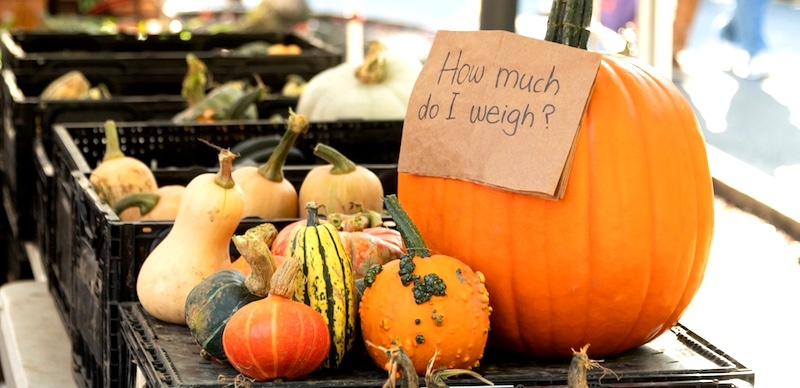
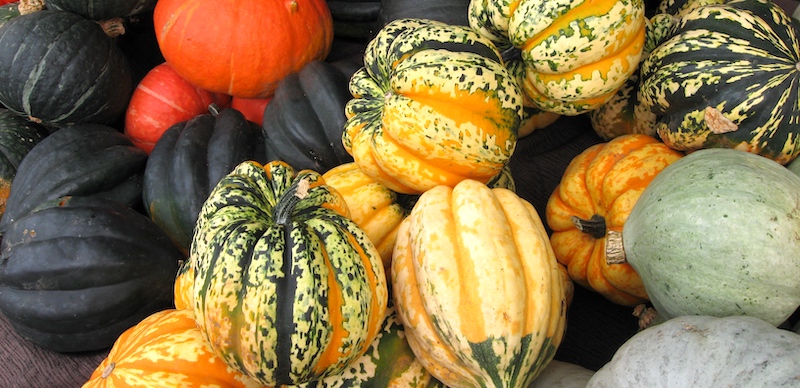
In the spirit of Halloween, it's the ideal time to feature the more than 900 members of the gourd family, or Cucurbitaceae. As Ginger Rapport of the Beaverton Farmers Market wrote in a recent newsletter:

"Although pumpkin, squash, and gourd names are sometimes used interchangeably, it is important to remember that gourds are purely ornamental. Botanically a fruit but culinarily used as a vegetable, winter squash and pumpkins can be decorative and can also be food.

"Because of its very long shelf life, winter squash is a great source of vitamins during the colder months. In our growers’ stalls, you will find plenty of colors, shapes, and sizes to choose from, and each variety has its own personality."

With its easygoing nature—being a breeze to clean and peel, with a sweet, slightly buttery flavor and smooth texture—Butternut squash is one of the most commonly mentioned types and the easiest to find in stores. But venture a bit further afield and you'll discover a world of other varieties to choose from whether you're making soups, curried stews or even desserts.

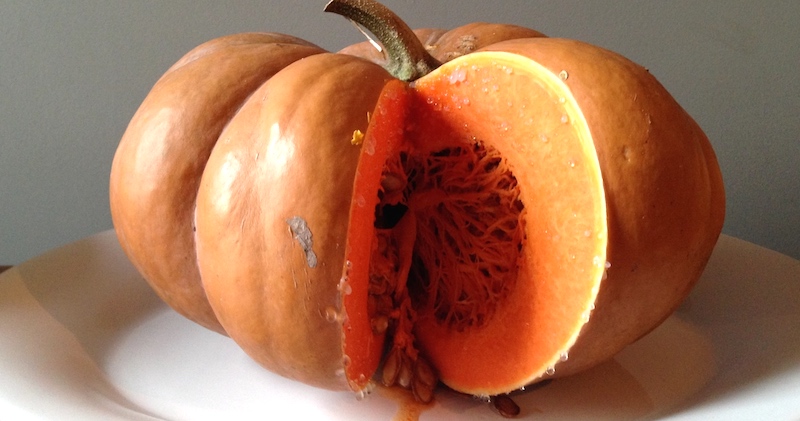
The voluptuous Musquée de Provence.

Just this last week I whipped up a delightful appetizer of fried squash blossoms from a gift of zucchini flowers from Randy Long of Cohesive Farms, a farmer at the Headwaters Farm Incubator in Gresham. Then a hearty dinner of minestrone soup that included colorful delicata squash from my Stoneboat Farm CSA, a squash I'm fond of because of its harlequin coloring and the delightful fact that this variety doesn't require peeling. (Find the recipe below).

Squash seems to be a natural pairing with curry, and the aroma of a curried squash stew simmering on the stove dispels any chill in the wintry air—check out this recipe for curried coconut soup (with or without the accompanying roasted cauliflower).

Winter squash come in a cacophony of colors, textures and flavors.

Squash desserts go far beyond just pumpkin pie—I have fond memories of the squash sorbet that Dave concocted with the roasted flesh of one of my favorite varieties, the voluptuous Musquée de Provence. But if pumpkin pie is your jam, particularly with Thanksgiving looming, ditch the store-bought Libby's and pick up a squash on your next trip to the farmers' market, whether a warty-but-delicious French heirloom Galleux d'Eysine, our own PNW variety the Lower Salmon River, or a more familiar Hubbard. Here's the recipe for Squash (Pumpkin) Pie I make at least a couple of times a season.

So broaden your horizons and give the butternut a rest, whether by picking up a kabocha, black futsu, Gill's Golden Pippin or Koginut. There's a whole world of squash out there to explore!

Winter Minestrone with Delicata Squash

1 onion, diced in 1/2" squares
3 cloves garlic, minced
1 carrot, diced small
2 medium delicata squash, cleaned and diced in 1/2" squares
2 c. diced zucchini
1 qt. roasted tomatoes, breaking up the large chunks with your hands)
8 c. chicken or vegetable stock
2-3 c. cooked cannelini beans (I used cooked pinto beans from Sun Gold Farm)
1-2 c. chopped kale or other greens (optional)
1-2 c. chicken, sausage or meat, shredded (optional)
Salt to taste
Finely grated parmesan, pesto and/or olive oil for serving at the table

Saute onions and garlic for 2-3 min. until golden. Add carrots, saute 2-3 min. (This is the base that Marcella Hazan refers to as soffritto—the raw, diced vegetables are the battuto. The final stage is the insaporire, or sautéing the rest of the vegetables in that base. Who knew?) In any case, add the chopped zucchini and saute for 2-3 min. Then add the rest of the ingredients except for the condiments (for the table) and bring to a boil. Cover, reduce heat and simmer for 2-3 hrs. Serve with parmesan, pesto and/or olive oil.

In Season: Mexican-style Escabeche

Peppers are popping at our farmers' markets. When I went to the Hollywood Farmers' Market to pick up our CSA share from Stoneboat Farm then wandered the aisles to see what else I might need, there were brilliant red sweet Italian peppers, fluorescent green anaheims, sunshine-yellow sweet peppers, and grassy green serranos, jalapeños, poblanos, shisito and, of course, those sneaky-but-irresistible padrons.

I was hoping to make Hank Shaw's Nopales en Escabeche, but in a fairly thorough search I couldn't find cactus paddles anywhere. But, instead of calling off the whole shebang, I bought a pound of jalapeños from Eloisa Organic Farm and decided to proceed with the plan, using the carrots and onion I had in my CSA bag.

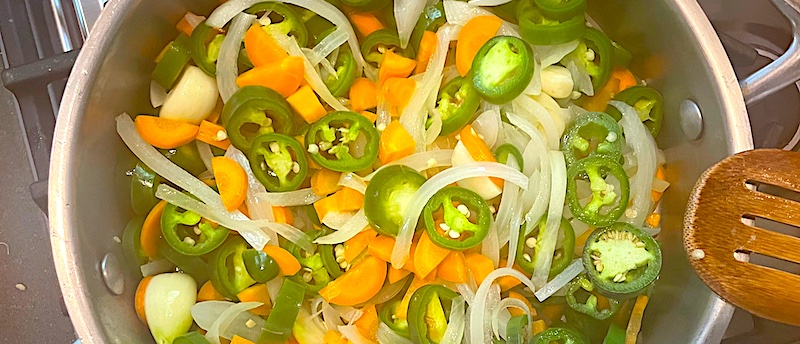
The vegetables are usually sautéed briefly before simmering in the brine.

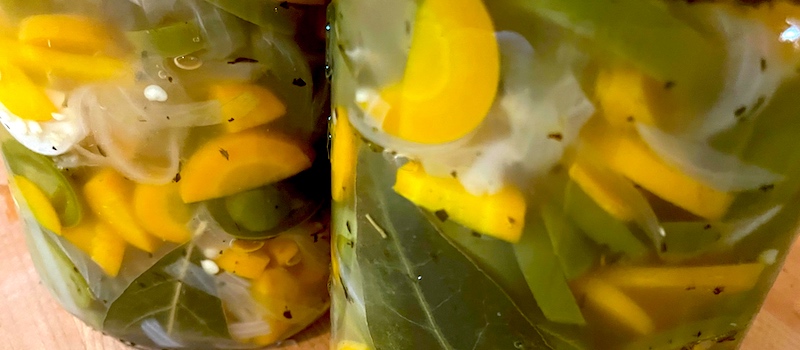
Mexican escabeche is that ubiquitous condiment familiar to anyone who's been to Mexico or has frequented an authentic Mexican restaurant. A combination of quick-pickled vegetables, it usually includes jalapeño peppers, carrots, onions and garlic, but can also have cauliflower, red onion, jicama or radishes in the mix.

The vegetables are generally sautéed for a few minutes—some recipes char the whole jalapeños in a hot cast iron pan—then the ingredients are simmered in the brine for a short period before being spooned into quart jars with the remaining brine. You can either seal them with a canning lid and, once they're cool, store them in the fridge, or water-bath can them so they're shelf-stable. The escabeche should then be ready to eat within a week and you're free to include them in tacos, tostadas, nachos, egg dishes, grilled meats or anything that could use a little pickley zing.

Mexican-style Vegetable Escabeche

1 Tbsp. neutral oil
1 lb. whole jalapeños
1 medium white, yellow or red onion, halved lengthwise, then thinly sliced vertically
3 medium carrots, halved lengthwise then sliced into thin coins or bite-size pieces 
1 head of garlic, cloves separated and peeled
2 bay leaves
1 tsp. dried oregano
1/4 tsp. dried thyme
1 1/2 c. water
1 1/2 c. white vinegar or white wine vinegar

Heat oil in a large sauté pan over medium-high heat. Place onions in pan and sauté for approximately 2 minutes.

Add jalapeños, carrots and garlic into the pan and cook until fragrant, about 2 minutes. Stir frequently to prevent the vegetables from sticking and burning.

Add the rest of the ingredients to the pan and bring to a boil. Cover and reduce to a simmer for 15 minutes, or until carrots and jalapeños are tender. Remove from heat.

Using a slotted spoon, transfer vegetables into two clean wide-mouth quart jars and fill with brine that remains in pan. Place canning lids on jars and seal with canning rings. Cool to room temperature and store in fridge, or water-bath can them according to canner directions.

Homemade Ricotta: Easy, Creamy, Dreamy!

Writing this blog has been full of slap-upside-the-head, "D'oh!" moments over the years. There was the time someone mentioned making a stock from leftover corn cobs. And another time when I discovered how simple it was—not to mention how much more delicious it tastes—to make your own peanut butter. (Got five minutes and a blender?)

I'm constantly asking myself: How could it have taken me so long to figure this stuff out?

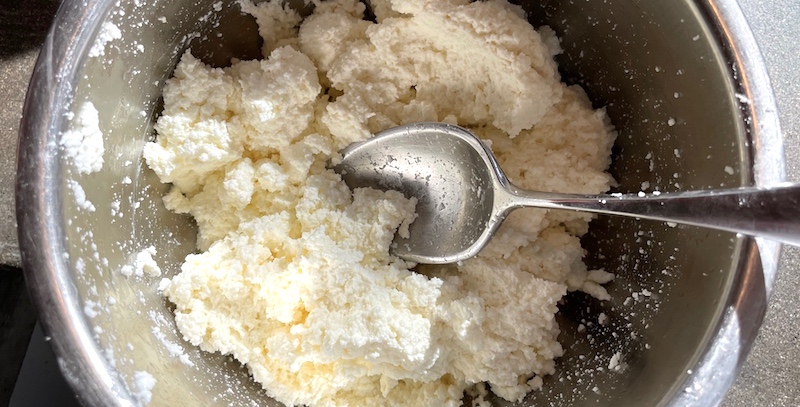
Drain ricotta until it's the texture you want, and remember to save the whey!

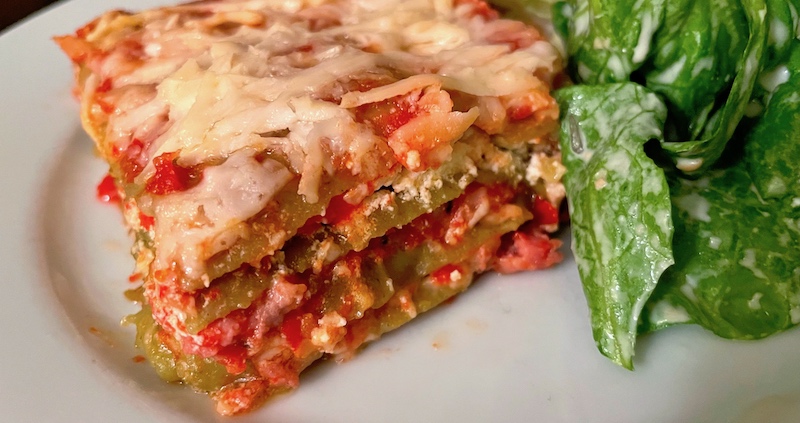
So this last week I decided to make a big pan of lasagne, something I've done a zillion times before. A few years ago I would have bought a container of ricotta and slathered it on the next-to-the-top layer to give a creamy, oozy richness to this Italian-American classic. But when Dave developed a problem with dairy, and with lactose-free commercial ricotta not readily available, I had to eschew that particular ingredient for several years.

Then I read somewhere that it was super easy to make your own at home. D'oh!

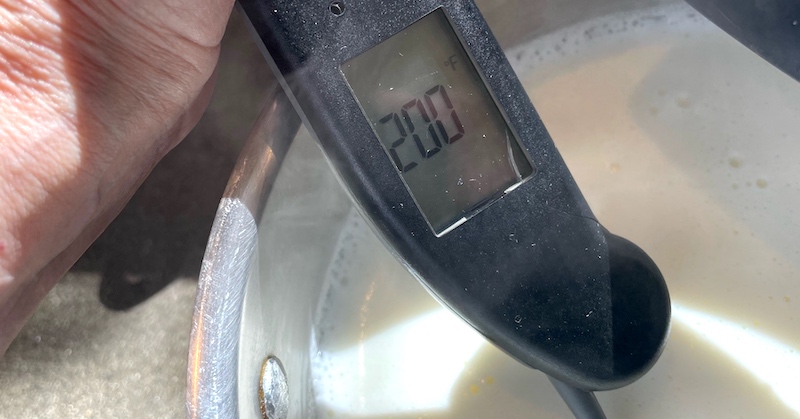
Bring milk to 200 degrees, stir in salt and lemon juice, drain and it's done!

While, according to my friend and cookbood author Nancy Harmon-Jenkins, traditional Italian ricotta is made from the recooked whey left over from cheesemaking (ri-cotta means "recooked"), another method makes a delicious fresh cheese that's as good or better than most store-bought brands. With the availability of organic lactose-free whole milk (thank you, Organic Valley), all it requires is lemon juice and salt!

I tried it, fiddled with the timing a bit to get the texture I wanted and, like magic, the creamy softness was back in our lives. And it's so dang easy, I can guarantee that it's going to start showing up on crostini, mixed in pasta and dolloped on salads.

Homemade Ricotta-Style Cheese

For 1 cup ricotta (double to make 2 cups):

4 c. whole milk
1/3 c. fresh-squeezed lemon juice
1 tsp. salt

In a saucepan, heat milk over medium heat (you don’t want to heat it too quickly). Stirring occasionally to keep it from scalding and measuring often with an instant read thermometer, bring milk to 200°.  When it reaches 200°, remove from heat and add lemon juice and salt. Stir a couple of times to combine and let it sit for 5 minutes. (You'll notice it start to curdle and separate.)

While it’s sitting, put cheesecloth or a cloth jelly bag in a fine mesh strainer over a large bowl. Pour the contents of the pan into the lined strainer and drain, making sure to save the watery whey (see note, below). Depending on how dry you want your ricotta to be, let it sit for two to 20 minutes. Draining it for a shorter time will give you creamier ricotta, while waiting the full time will result in a dry texture. When it's reached your desired texture, taste it for salt and adjust.

NOTE: Save the whey (the watery liquid left after draining) and feed it to your chickens or pigs. If you don't have livestock, don't worry—you can feed it to your family, as well! It's very nutritious and is great added to soups, stews and sauces that benefit from a slight milkiness. (Think chowders, or a potato-leek soup.) One reader said she used the leftover whey to cook pork loin in the crock pot for pulled pork, which confirms what I'd read about the acids in the whey helping to break down meat. I've used it to make carnitas, and it worked fabulously. Try it!

Tags: ricotta, WHEY, RECIPE,

Winter Warmer: Quick Kimchi Stew Comes Together in a Flash

Even in the coldest months we keep our house at a moderate 66 degrees, both to save energy and money, though I've been known to sneak it up a degree (to 67!) if the chill begins to seep too far into my bones even under several layers of clothing.

In the past couple of days our furnace kicked on for the first time this fall, which inevitably signals the beginning of serious soup, stew and braising season around here. Warming from the inside out, not just filling growling bellies, is the point of setting down a steaming bowl in front of my family, and we keep them in regular rotation through the cold months.

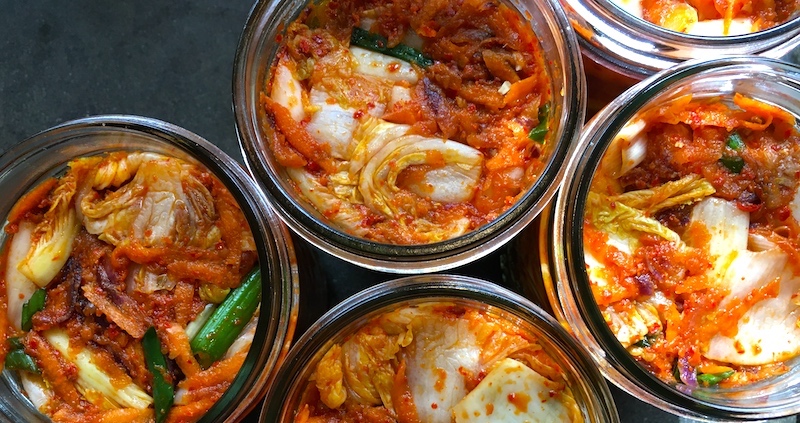
Homemade kimchi (link to the simple recipe, below).

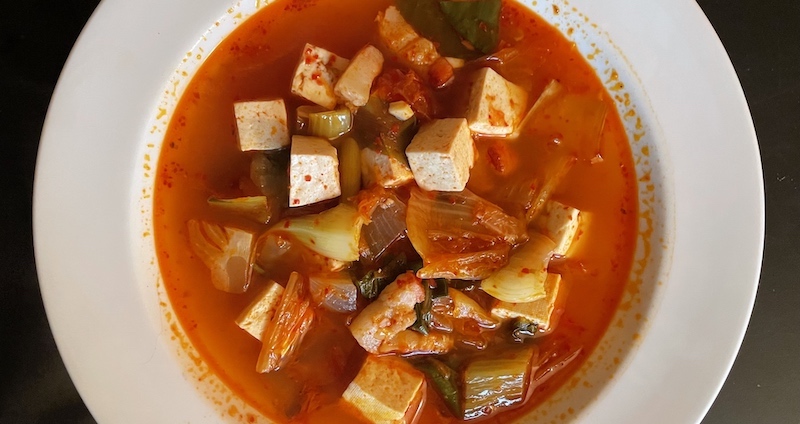
Some soups and stews benefit from spending hours melding their flavors in a big pot on the stove, filling the house with an aroma that promises something hearty and mouthwatering to come. Others can come together in less than 30 minutes—I see you Creamy Tomato Soup and your cousin, Split Pea—or can be made ahead to serve when the need arises. The stew below is one of those, quick to make but one that is equally happy to simmer on the stovetop or even wait in the freezer for its debut.

Since I now have homemade kimchi on hand, it's a handy solution for one of those I-don't-feel-like-cooking nights when inspiration and/or time are in short supply. If you don't make your own kimchi, I heartily recommend locally produced Choi's Kimchi or those available at local farmers' markets.

This recipe calls for pork belly, but it's also fantastic with smoked bacon, shredded leftover chicken or even no meat at all. Exquisitely flavored, it needs nothing more than the addition of fluffy rice to make a company-worthy feast.

Kimchi Stew

Adapted from Susana Holloway

2 Tbsp. vegetable oil
1/2 lb. pork belly, in 1/4" dice
1/2 onion, diced
3-4 cloves garlic, minced
2 c. (1 pint) napa cabbage kimchi
4 c. chicken stock
1 block firm tofu, cut in 1/2" dice
1 Tbsp. fish sauce
Salt and pepper to taste
Chopped cilantro or sliced green onions for garnish (optional)

Heat vegetable oil in a soup pot or Dutch oven over medium heat. When the oil shimmers, add the pork belly. When it has rendered most of its fat, add onions and sauté until tender, then add garlic. When garlic is warmed, add in kimchi and stock, bring to a simmer and cook on low heat for about 30 minutes. Add tofu and fish sauce and simmer for a final 5-7 minutes to warm tofu through. Season to taste with salt and pepper if needed and garnish with cilantro or green onions if desired.

Celebrate National Hispanic Heritage Month with Locally Grown Chiles!

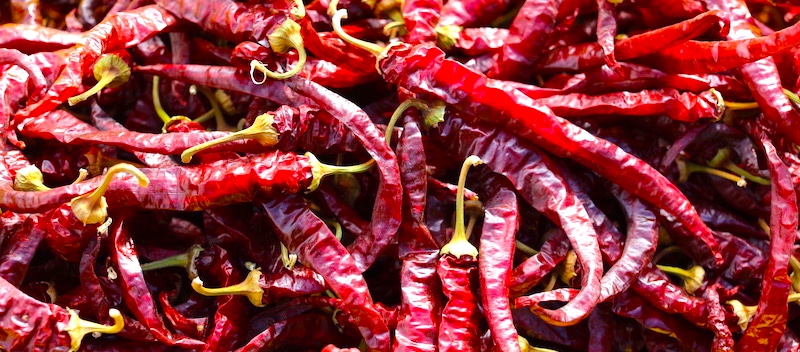
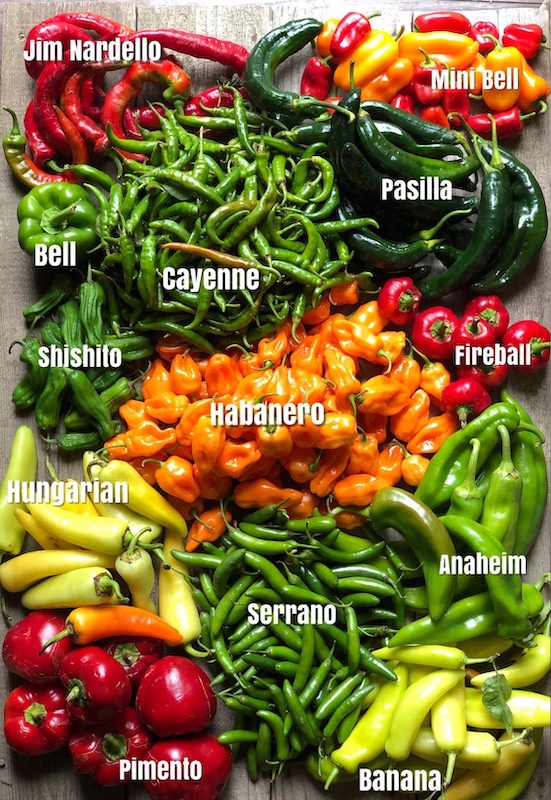
Right now our farmers' markets are flooded with a plethora of colorful chile pepper pods, and since September 15th through October 15th is National Hispanic Heritage Month, it's the perfect time to explore these beautiful and flavorful members of the capsicum family. Fortunately, Ginger Rapport of the Beaverton Farmers Market just sent out a primer in their current newsletter!

One of the ingredients that almost all Hispanic cuisines have in common is chile peppers.

Chile vs. Chili: According to Chef Mark Miller, author of the The Great Chile Book, the generally accepted convention is that "chile" refers to the plant or pod while "chili" refers to the dish made from meat and chiles. The name pepper is a misnomer that has existed since Christopher Columbus encountered capsicum plants and erroneously thought that he had found the plant that produces black pepper, which has no relation to capsicum. However, the name pepper is still used interchangeably with chile.

The chemical in chile peppers that gives them heat is capsaicin which is technically a neurotoxin. It stimulates the adrenal glands to release hormones, which theoretically creates an energy rush. The fiery sensation you feel also triggers the brain to produce endorphins, natural painkillers that promote a sense of well-being and stimulation. They can also make you sweat, which is your body’s natural air conditioner. This may explain why chiles figure prominently in cuisines in and around the tropics.
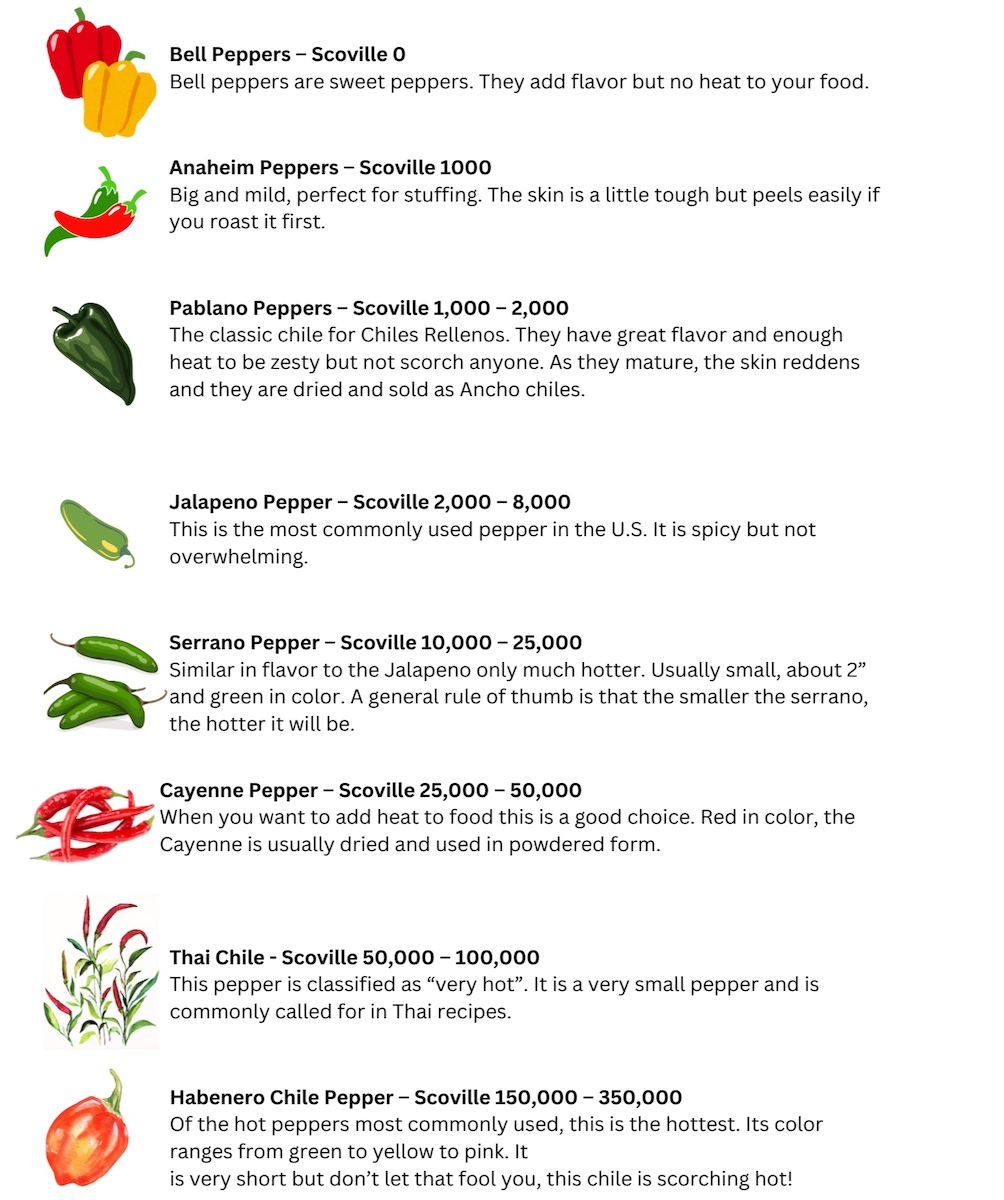
Depending upon whether you like them hot, mild, or somewhere in between, you will want to make informed decisions when purchasing chiles. The first thing that you should know is that the heat level in a chile is rated on a scale known as the "Scoville Heat Index." Invented by Wilbur Scoville, it ranks chiles in order from mildest to hottest in Scoville Heat Units (SHU), with zero being the mildest and the hottest being over a million. In general, the smaller the chile, the hotter it is. Below is a guide to the most common chiles found at farmers' markets. Scoville rankings* are included for each. Most of the heat is located in the seeds and white ribs inside. Removing the seeds and ribs, using only the flesh of the chile ,will give you all of the flavor and less of the heat.

Keep in mind that you should use gloves when handling the hottest peppers to avoid irritating your skin. It is important that you do not touch anything, especially your face—we know this from experience—before disposing of the gloves and washing your hands thoroughly.

Other peppers you will find in the market:
Padron Peppers: Scoville 500-2,500. Originally from Spain, they are harvested young and small, they typically have no seeds. This makes them mild, perfect for eating whole. Farmers tell us that about one in every 12 will be surprisingly hot and there is no way to know which one packs the extra punch, but take a nibble of the very tip to get an idea of how hot it is. Prepare by sautéing in olive oil until it is blistered and serve sprinkled with salt.

Shishito Peppers: Scoville 50-200. Popular in Japan, these are very similar to Padron peppers. Serve them sautéed with a drizzle of soy sauce and sesame oil. Very tasty in tempura.

Habanada: Scoville 0 (yes, zero). Bred by well-known organic plant breeder Michael Mazourek of Cornell University, these exceptional snacking peppers have all of the fruity and floral notes of the habanero without any spice (even the seeds are sweet and add to the flavor).

* Scoville rankings are often given in a range because varieties and growing conditions vary.

Photo of peppers from BFM newsletter, courtesy Shannon Feltus, Urban Farm Foods.

Scratching that Itch: Gochujang Mac'n'Cheese

It was like a tingling between my shoulder blades that I couldn't quite reach. The niggling thought in my brain had been amorphous at first, as elusive as a phantom, but it had the unmistakable flavor profile of the homemade gochujang from my friend Denise's family.

It was even a little scary, a crossing of lines if you will, kind of like the kimchi risotto that I made during the pandemic, trying to use what was in our pantry so we didn't have to make a trip to the store. But with this there wasn't that excuse, since I had everything on hand that I would need. Plus, really, the likelihood of an inedible culinary disaster was remote—my family will pretty much eat anything, exclaiming "tasty!" as they chow down.

So, to cut to the chase, an attempt at making gochujang mac'n'cheese had been on my mind for awhile. Sure, I've made various iterations of the classic cheesy noodle casserole from versions laced with salmon, Dungeness crab, pimento cheese, even one with a Tex-Mex twist. But a Korean-inflected version somehow seemed like a bridge too far—call me a drama queen, but it gave me the willies.

Maybe it was the idea of combining cheese with the chiles, fish sauce, sesame oil and miso in the gochujang. But we'd been making kimchi quesadillas—with cheese and the pickled, chile-laced cabbage—for lunch since I'd been making my own kimchi. What was there to be nervous about?

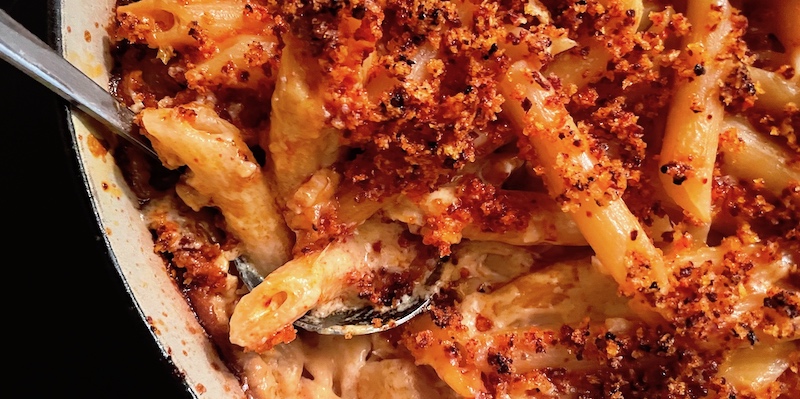
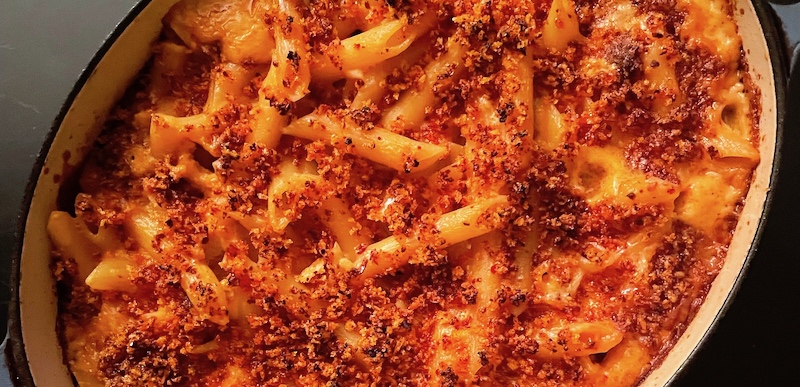
When I ran across a mention of a panko, gochugaru and sesame oil topping that would give the top a nice crunch, suddenly the clouds cleared, the sun came out and all seemed right with the world. I'd still caution the curious to be aware that this is not your mother's mac'n'cheese or anything that Annie or Mr. Newman would put in a box, but it's pretty awesome, if I do say so myself.

Gochujang Macaroni and Cheese

For the topping:
3 Tbsp. Panko
1 Tbsp. gochugaru
2 Tbsp. toasted sesame seeds
1 Tbsp. toasted sesame oil
1/2 tsp. salt

For the casserole:
1 lb. dried pasta (we like penne or rigatoni)
4 Tbsp. butter
4 Tbsp. flour
1 Tbsp. garlic, minced
2 c. milk
8 oz. sharp cheddar cheese, grated
8 oz. cream cheese
3 Tbsp. gochujang
Salt and pepper to taste

Bring a large pot of salted water to boil.

While water is heating, combine the topping ingredients in a small bowl. Set aside.

Over medium heat, melt butter in medium-sized saucepan. Remove from burner and add flour, stirring to combine. Place saucepan back on burner and cook on low heat for 1 minute, stirring constantly. Add garlic and stir briefly. Add milk gradually, stirring until it begins to thicken, then add cheese in handfuls, stirring after each addition until melted. Add cream cheese and stir until sauce is thick and creamy, then stir in gochujang. Add salt and pepper to taste. (The sauce should be slightly saltier than you'd normally make it, since when combined with the pasta it will tend to make it taste less salty.)

Add pasta to boiling water and cook until al dente. Drain and put back in pasta pot, add cheese sauce and stir gently to combine. Transfer to baking dish, sprinkling the topping mixture evenly over it. Bake in 350 degree oven 30 minutes.

The Best Cocktail in the World

I know, I know, calling a particular drink "the best cocktail" is hyperbole on the scale of saying one religion is the true path and everyone else is going to H-E-double toothpicks. And there are going to be comments like, "Whaddaya mean..." and "You're fulla..." But, doggone it, it's my favorite and I'm not afraid to say it.

Now, I've had lots of other great cocktails. After all, there is such a thing as due diligence in these matters and I'm all about fair play. Martinis, Manhattans, mojitos, lemon drops, G&Ts, sidecars, toddies...I could go on. But the Negroni is the one I always come back to as my touchstone, especially as made by my favorite bartender.

Serving over ice on hot summer days is allowed. (We won't tell!)

And it's not for everyone. You have to have a taste for the bitter (Campari) along with the sweet (vermouth). And the perfect accompaniment is a twist of lemon, though many practitioners are trying to substitute orange peel—in my opinion giving the drink a cloying oiliness rather than the zing that lemon rind contributes.

So if you're ready to try one, here's the recipe that we've adopted as our own.

Our House Negroni

A good friend of mine described the Negroni as "the perfectly balanced cocktail when made correctly." I've got to agree. The richness of the gin, the bitter-sweetness of the Campari, the balancing acidity of the vermouth. Measure it out if you have to, free pour if you're confident enough, just make it. This is a great old-school drink that originated in the 1930's, and is making a comeback today. Big ups for this very refreshing adult beverage.

1 part Gin
1 part Campari
1/2 part Sweet Vermouth
1/2 part Dry Vermouth

Fill your cocktail shaker halfway with ice, dump in the booze, shake then strain into a chilled martini glass and garnish with a twist of lemon.

A note on the gin: I love Beefeater and Taqueray, but with this drink I actually prefer the less assertive flavor of a Gordon's Dry Gin or a similar mid-range gin. Also, if you look in a vintage bar guide, it will invariably say one part sweet vermouth with no dry vermouth. But I was shown this half-and-half method by the bartender at Bix Restaurant in San Francisco many years ago—a great "must stop" bar for you martini fans—and this rounds out the flavors perfectly. Cheers!

Astiana Tomatoes: Ayers Creek Farm Legacy Lives On Through Seed

The photo appeared on my phone with the message "Spotted at Portland Nursery today!" It showed a tomato plant in a four-inch plastic pot with a label stating "Astiana Tomato."

Along with the other stunningly delicious vegetables, corn and pole beans grown by Anthony and Carol Boutard at Ayers Creek Farm—I counted more than a dozen varieties of dried beans at one point, though many more may not have measured up to their exacting standards and been shelved—these tomatoes were feared lost to their adoring fans when the Boutards sold the farm in 2022.

Astianas fresh from the field at Ayers Creek Farm.

Fortunately a few area farmers had the presence of mind a few years back to start growing out these open-pollinated tomatoes, but remember, if you only start with a few seeds, it can take several seasons to have enough seeds to produce fruit in sufficient quantities to supply customers. So the descendants of the original Astianas were available from a few farms in limited quantities, though none had ever been grown for nursery stock aimed at home gardeners.

Enter legendary plantswoman Alice Doyle of Log House Plants in Cottage Grove, who saw the value of adding this remarkably stable variety to her list of 180 other tomato varieties. "It's a really good tomato for this region," she said, ticking off its disease-resistance and the fact that they are self-pollinating, as well as the care the Boutards took in selecting seed every year.

Doyle related that Anthony would have the first fruits to ripen in the field for his breakfast every morning. She said he would cut them open and, if they were fragrant and didn't have many seeds—these are paste tomatoes, after all—those were ones he'd save.

Chopped and ready to roast.

Taking the Boutard's breeding program one step further, Doyle grafted the Astianas onto a root stock, a technique she observed on her travels in Crete. Calling it a sustainable procedure that results in four to five times more fruit per plant, it also increases the plant's resistance to soil-borne disease. A side benefit was that Astianas were already resistant to late blight, an airborne disease best known for causing the devastating Irish potato famine of the 1840s.

Doyle was surprised at the number of requests she'd been getting from nurseries and home gardeners for them. "I can't believe how many people are asking for them," she said. Though anyone who remembers the long line of customers during tomato season at the Ayers Creek Farm booth at the Hillsdale Farmers Market could have assured her that these late season beauties were more than worth seeking out.

As the plant tag, written by Anthony himself, says, "excellent to sauce, preserve and eat fresh. From a landrace tomato where the 'Sound of Music' was filmed near Asti in the Po Valley of Italy. Selected and refined by Ayers Creek Farm, Oregon, as the best tomato for the 45th parallel."

Astiana plants are available from several local nurseries including Portland Nursery and Cornell Farm, as well as in the Seattle area, according to Doyle. She instructs: "Do not bury deep so the graft is as far away from the soil as possible. Match the level in the pot so the scion doesn’t root in and compromise the benefits of the rootstock."

Read the archives of Anthony Boutard's fascinating Farm Bulletins that chronicle the seasons at Ayers Creek Farm here and here.

Boardman Residents Sue Polluters Over Contaminated Drinking Water


A review of 30 recent studies lists the most prevalent risks associated with
ingesting nitrates as blue baby syndrome (methemoglobinemia), colorectal cancer,
thyroid disease, and neural tube defects, even at levels below regulatory limits.


The State of Oregon and federal agencies have known for more than 30 years that there was a serious problem with industrial and agricultural pollution of the water in Morrow and Umatilla Counties, yet residents of those counties are saying that next to nothing has been done about it.

On February 28th of this year, five Boardman residents filed a class action lawsuit in federal district court in Pendleton accusing the Port of Morrow, Lamb Weston, Madison Ranches, Threemile Canyon Farms—a 70,000-cow megadairy that supplies most of the milk for Tillamook's products—and Beef Northwest Feeders of contaminating groundwater in Oregon’s Lower Umatilla Basin by dumping nitrogen throughout Morrow and Umatilla Counties. Attorneys estimate the issue affects upwards of 46,000 residents, many of whom are children.

Morrow and Umatilla County residents holding signs met with Oregon
Senator Jeff Merkley (back row, center) to discuss contaminated water in January of 2023.

Since 2017, I've written on Good Stuff NW about the damage caused by industrial agriculture starting with a post titled "Why I'm Quitting Tillamook Cheese." That post became the basis of an article for the news website Civil Eats, "'Big Milk' Brings Big Issues for Local Communities" which connected the dots between industrial agriculture and the health of the communities—along with the air and water—around these facilities, especially when, as in Oregon, they are regulated as "farms" and not the industrial facilities they actually are. Even back in 2017, the Oregon Department of Agriculture admitted that some wells used for drinking water contained nitrate levels over the federal maximum allowed.

A review of research published in the International Journal of Environmental Research and Public Health in 2018 analyzed more than 30 recent studies on the effects of nitrates in drinking water, listing the most prevalent risks as blue baby syndrome (methemoglobinemia), colorectal cancer, thyroid disease, and neural tube defects, adding that "many studies observed increased risk with ingestion of water nitrate levels that were below regulatory limits." [Emphasis mine.]

“Defendants have dumped, and continue to dump, millions of pounds of nitrogen onto land in Morrow and Umatilla counties,” the lawsuit said. “Nitrogen in the ground converts into nitrates, which then percolate down to the water table in the Lower Umatilla Basin, polluting the subterranean aquifer on which plaintiffs and class members rely for their water.”

Manure lagoons at some industrial farms in the area can cover as much as 20 acres.

In an article in the Capital Press, Boardman resident Michael Pearson, one of the plaintiffs in the suit, said that his family relies on a private well. When he had his water tested in 2022, he was shocked to discover it contained many times over the nitrate level considered safe by federal authorities. When he had a filtration system installed to treat the water, it still remained well over the federal maximum.

Two other plaintiffs, Michael and Virginia Brandt, discovered their water was contaminated when they had it tested, but they couldn’t afford a filtration system. James and Silvia Suter said that nitrate levels in the water coming out of their taps is four times the federal maximum, but when they looked into drilling a well deeply enough to get to uncontaminated water, the cost was quoted at $24,000.

For many years nitrate levels in some drinking water wells in the Lower Umatilla Basin
have tested several times over the federal maximum.

Oregon Public Broadcasting interviewed Steve Berman, a lawyer for the plaintiffs, where Berman compared the nitrate pollution in the Lower Umatilla Basin to the drinking water crisis in Flint, Michigan, where thousands of people were exposed to lead and other contaminants through the municipal water system.

"There's some very powerful agri-businesses and the port, they make a ton of money off dumping this polluted water, and they have a lot of clout. So no, I wasn't surprised," Berman said in an interview with KGW-TV for their "Tainted Waters" series. "I think it's gone on so long because a lot of the victims are low-income minorities who can't afford to hire lawyers, don't have a voice in politics. As I said earlier [in the interview] if this was happening to a wealthy suburb of Portland, it would have been stopped years ago.”

The plaintiffs are hoping not only to gain compensation from the defendants, but also to require them to clean up the basin's soil and groundwater, to get residents connected to a clean source of water, and begin medical testing of residents for health issues related to nitrate contamination.

Top photo: Sprinklers spraying wastewater at Threemile Canyon Farms (from its Facebook page). Photo of Sen. Jeff Merkley meeting with residents who are experiencing contaminated water. Photo of manure lagoon at Threemile Canyon Farms from Friends of Family Farmers.


Disclaimer: One of the defendants in the lawsuit, Beef Northwest, is the current incarnation of the Wilson ranch, founded by my great-grandfather in North Powder, Oregon, in 1889.