
Meeting My Heroes: Hani Almadhoun of Gaza Soup Kitchen
It's not often you get to meet your heroes in person, but I read a social media post from Hani Almadhoun that he'd be coming through Portland after meeting with supporters in Corvallis. It was part of his day job as Senior Director of Philanthropy for the United Nations Relief and Works Agency for Palestinian refugees (UNRWA) in Washington, DC, and I immediately asked if he'd have time for a quick interview. He graciously agreed.
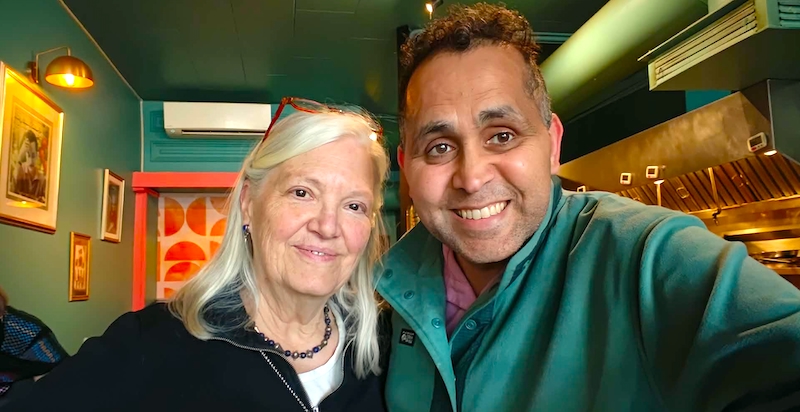
We met in early June at a Syrian café, Shami, across from Mt. Scott Community Center. Having only known him from his social media posts, I was surprised when a big guy in a green fleece jacket jumped up from a back table and introduced himself. The table was covered with UNRWA and Gaza Soup Kitchen t-shirts and tote bags—I'd neglected to wear my GSK shirt that day—and we were almost immediately joined by other supporters who shared plates of Syrian-style hummus, shawarma, kabobs and house-made lavash served by owner and chef Wael Elasady.
While his work with UNRWA is a full time gig, Hani spends much of his spare time raising funds for his passion project, the Gaza Soup Kitchen, as well as raising two young daughters with his wife at their home in Virginia. The Gaza Soup Kitchen was founded two years ago by Hani and his brother Mahmoud when Israel, with funding and weapons from the United States, began their bombing campaign bent on destroying Palestine and its people.
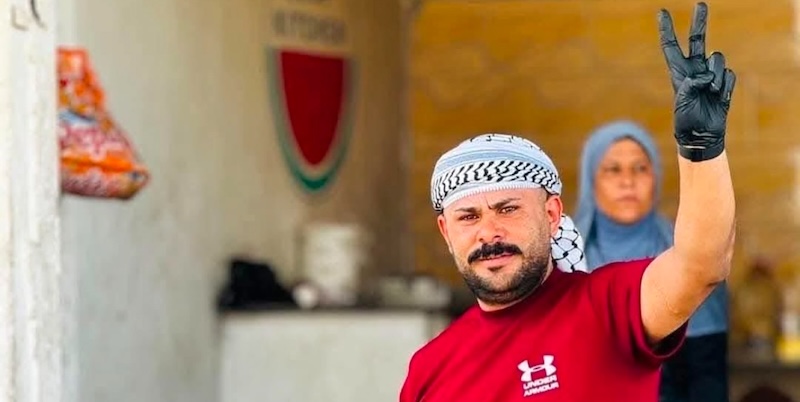
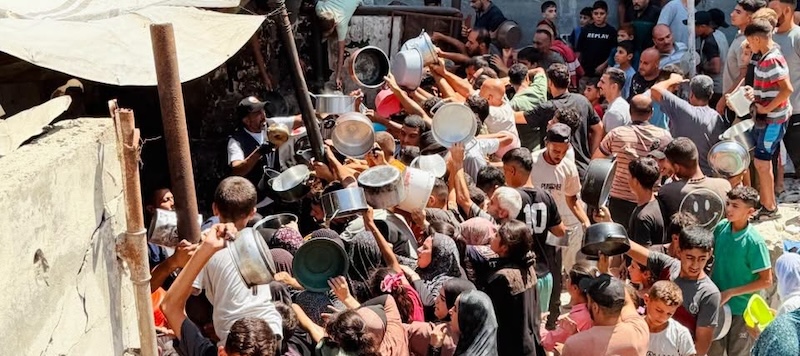
With much of the population displaced and the country's infrastructure flattened, Mahmoud and a few helpers gathered three large pots and some scavenged firewood from the bombed-out ruins around them and began cooking soup for their starving neighbors. Several months into the genocide, Mahmoud was assassinated by an Israeli drone. His family, including his parents, children and extended family, while devastated in the aftermath of the terrible loss, kept their cooking fires lit and their community fed.
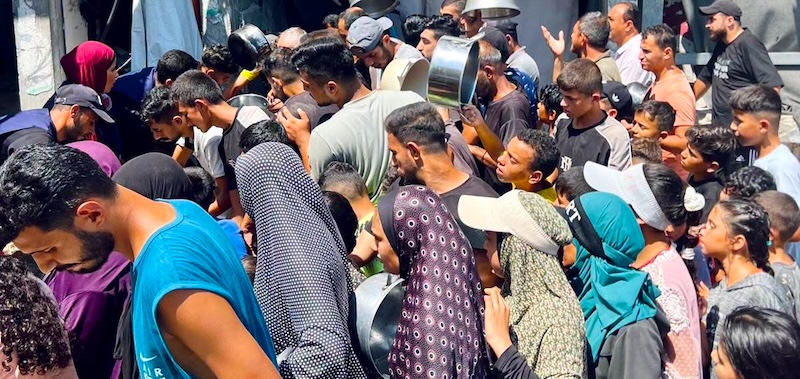
Hani now spends much of his time outside of work for UNRWA raising funds to purchase the food that the soup kitchen prepares—as well as reminding the world on Facebook and Instagram that the people of Palestine are still standing despite the horrific efforts of the Israeli government to erase them. With 26 kitchens currently in operation all over Gaza, their crew—all of whom are paid for their work—also pack bags of groceries, including cleaning and sanitary products, for distribution to displaced families living in tents. They also run medical points for first aid, distribute clean water, prepare and distribute meals for patients in the few remaining hospitals, and run schools for displaced children.
In a recent post on Facebook, he wrote:
I sometimes ask myself: when this is over, what will I do? What are my hobbies? What does my mind reach for when it is not carrying this? I honestly do not know anymore. The anniversaries alone — if we are lucky enough to survive to them — come with videos we have to revisit, family members we have to miss all over again. There is no clean way through that.
It has been going on so long I cannot imagine the other side of it. The person who sells homes or writes code or makes your overpriced cup of coffee can burn out and step away. This is not a job I can leave. It is tied to everything I define myself by. A simple hello to my parents on the phone brings it all right back. If someone is not feeling well, I catch myself praying they will not need a medical evacuation that is not coming.
Some of these posts heal me. Some of them cost me something. But I feel a fundamental obligation to keep writing.
Not because I am not exhausted. I am.
But staying quiet is a privilege I do not have. If I tune out, this becomes background noise. And these are not statistics. These are my people.
So I keep writing. Not because it is easy. Because it is the bare minimum I owe to the people living through it.
Several months ago Hani also began writing a book that he described as telling not only the story of the Gaza Soup Kitchen but the stories of the people of Gaza from inside the community—the loss, the grief, the activism. "I figured that we should tell our own story, as well," he said.
I'm looking forward to reading it.
Photos by Hani Almadhoun and Gaza Soup Kitchen staff.