Discovering Our Northwest Waterways: Kayaking Lacamas Lake
I can already tell that my paddling adventure is going to much more than a way to get out on the water—admittedly my personal happy place. After only two outings, it's challenging my ability to absorb new information, move in new and sometimes daunting ways and—at 71 years of age—to accept some of the limitations that come with being an older person.*
It's also teaching me about the waterways that are such a critically important part of our life here in the Pacific Northwest.
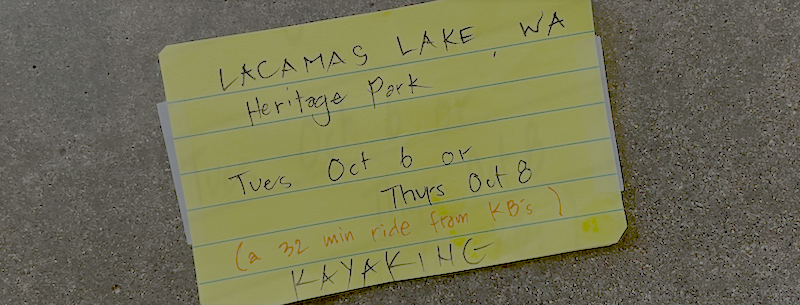
When my friend Keith suggested a paddling trip to Lacamas Lake just across the river near Camas, Washington, I jumped at the chance. The weather was going to be spectacular—this fall has been one for the record books in terms of warm-but-not-too-hot days—and the lake was fairly close, just a half hour drive away. Plus it would give me practice in launching from a dock rather than the shoreline, an important skill.
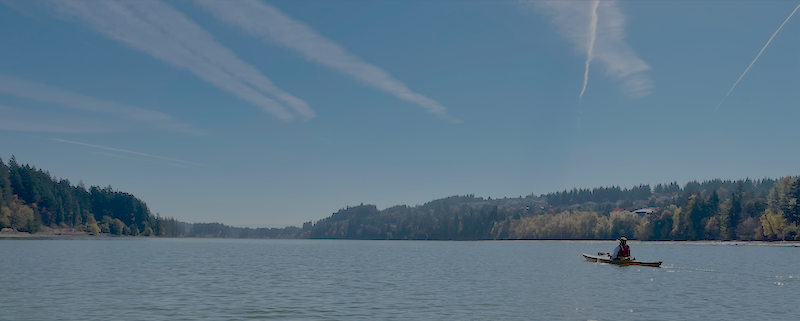
The lake is a bit more than two miles long, with the boat dock located at the south end of the lake, making it a challenge to row to the other end where Lacamas Creek flows into the lake. The water level was very low, partly due to the severe drought affecting nearly 90 percent of Oregon, but mostly because of the the annual drawdown of water to repair the dam at the south end that creates the lake.
We saw people running, biking and walking the trail along the lake's edge, and there was even one group sitting in lawn chairs fishing from the shore. A blue heron lumbered by looking like a pterodactyl's cousin, and a snowy white egret strolled through the aquatic plants exposed along the shoreline. While the lake was mirror-like when we started in mid-morning, by the time we reached the north end of the lake a light breeze had kicked up from behind us, riffling the water and making the paddle back to the dock slightly easier.
Having seen evidence of blue-green algae near the dock, when I got home I was dismayed to read this from Wikipedia:
"One of the reasons the lake cannot support many fish is because of severe pollution from phosphorus, nitrogen, ammonia, as well as lack of circulation to the deeper parts of the lake. This allows a detritus sludge to form that is devoid of oxygen, not allowing the organic compounds to break down efficiently. The phosphorus, nitrogen and ammonia collect in the lake water and the lake bed from polluted streams that run into the lake after passing through farm fields, barnyards and subdivisions."
I immediately thought of the paddle-boarders I'd seen while we were out and, more alarmingly, the group of gentlemen who were fishing from the shore.
Reading further, I discovered that local residents concerned about the water quality of the lake and the larger watershed got together and formed the Lacamas Watershed Council (LWC) in 2019. According to Terris Becker, the organization's vice president and secretary, the LWC, the city of Camas and the Clark County government began working together to make significant efforts to improve the water quality in the lake and its tributaries.
Led by the LWC, that meant regular testing of the water to provide early detection of the presence of toxic algae along with community outreach to home owners' associations about reduction of toxic runoff from fertilizers and pesticides into waterways. Becker said that while the LWC does not have enforcement authority, its educational outreach to homeowners and farmers has begun to yield positive results.
Becker added that from mid-April through June visitors can often find a field of native camas lilies in bloom in nearby Round Lake, which is connected to Lacamas Lake and also features miles of hiking trails for visitors.
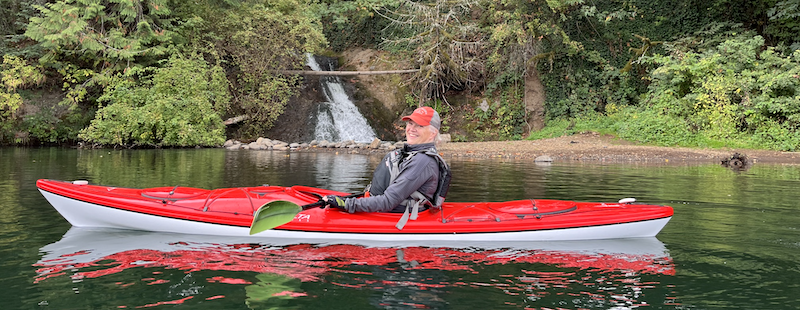
* Extra points if you notice that I'm holding my paddle upside down in the top photo. Keith alerted me to my faux pas and, gosh, if it didn't make a difference!