Road Tripping: Exploring the Olympic Rainforest Coast
All I clearly remember about the 1994 novel "Snow Falling on Cedars" by David Guterson is its description of the dripping, thickly moss-covered trees and rocks, and the multilayered lushness of ferns growing from fallen logs, all dimly illuminated by the light filtering through the misty air. Though the novel takes place in the San Juan Islands of Washington's northern Puget Sound, it could just as well have been describing the coastal rainforest immediately west of the Sound on the state's Olympic Peninsula.
We'd made reservations to visit Washington state's central coast after I came across a "three nights for the price of two" deal at a resort in the area. We'd backpacked in the central peninsula decades ago, but had never ventured further up the coast than the Long Beach Peninsula, so this was a chance to explore an area new to us. The weather forecast prior to the trip was partly rainy with a day or so of breaks in the middle of the week, but as the date neared it gradually shifted to the "mostly rainy" side.
Oh, well, we're Oregonians, right? And rainy days just mean more time to relax, cook, read and chill, right?
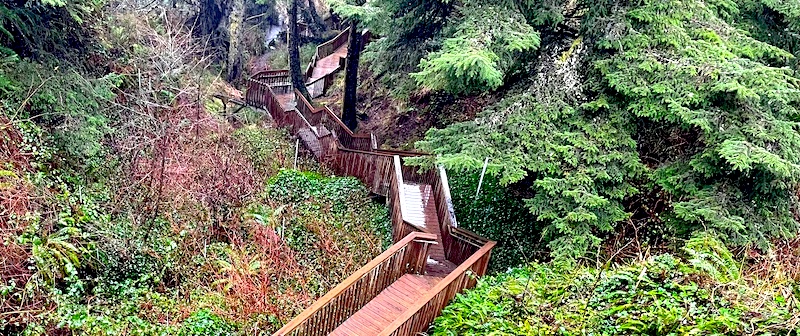
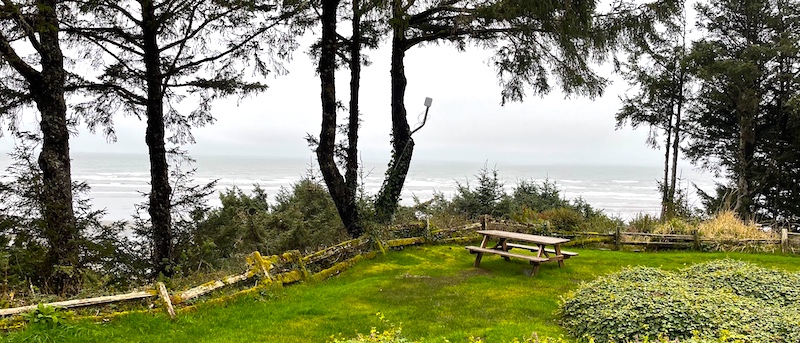
We checked into our two-bedroom suite (including a full kitchen and a drop-dead view overlooking the ocean) at the Ocean Crest Resort in the tiny town of Moclips. There was a break in the rain, so we quickly unloaded the car, the better to get down on the beach for quick walk before dinner. The resort, perched at the top of a steep hillside above the beach, is known for its signature winding wooden staircase that descends to the shore by way of short flights of stairs connected by landings and walkways, most with benches for taking a breather between flights for the inevitable walk back up.
Sadly, the long, flat beach bordered by yellowed seagrass had recently been inundated a couple of days prior by a seasonal tide of the small floating creatures known as by-the-wind-sailors, and the stench was overpowering, at least until you got close to the water. This stretch of coast is known for its razor clams, and we saw plenty of their vent holes, along with the shells of sand dollars and various other varieties of clams.
Dinner that first night was pasta with bolognese brought from home and roasted cauliflower, after which we dropped into bed, exhausted. Here I have to insert that the video of the resort on its website—with the exception of the restaurant, which was rebuilt after a fire in 2011—leaves a somewhat better impression than the actual facility. Established in 1953, in its heyday the resort must have been hopping with its mid-century, Mad Men-esque vibe reminiscent of Salishan in Oregon, but currently the exterior is a bit down-at-the-heels. According to the management, some rooms have been refreshed, and hopefully it will continue to be rejuvenated by new owners who took over in 2022.
I was looking forward to getting some local seafood for dinner our second night, but, aside from razor clams, the area was closed for shellfish harvesting (map here). Fortunately, Moclips is located on the southern boundary of the Quinault Indian Nation, which has its own fish processing plant, Quinault Pride Seafood, in the town of Taholah, just a 20-minute drive north.
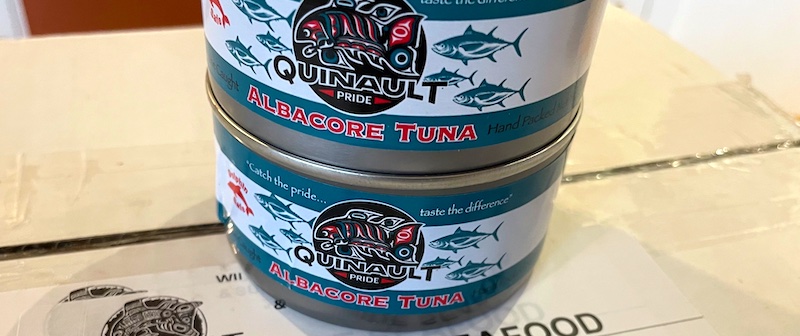
The retail store at one end of the cheery blue Quinault Pride building on the riverfront in Taholah featured a large freezer case stocked with gorgeous filets of salmon, chunks of smoked salmon and packaged razor clams, plus tribally processed cans of salmon (Coho and steelhead), smoked salmon, sturgeon, minced clams and…be still my heart…line-caught albacore. We got some gorgeous frozen razor clam "steaks" for dinner, plus smoked salmon to snack on and a case of canned albacore to bring home.
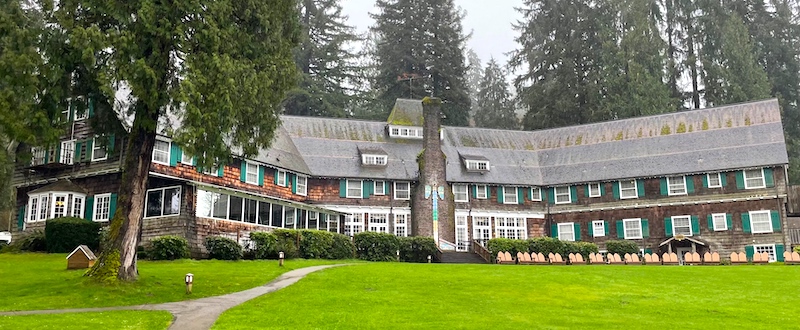
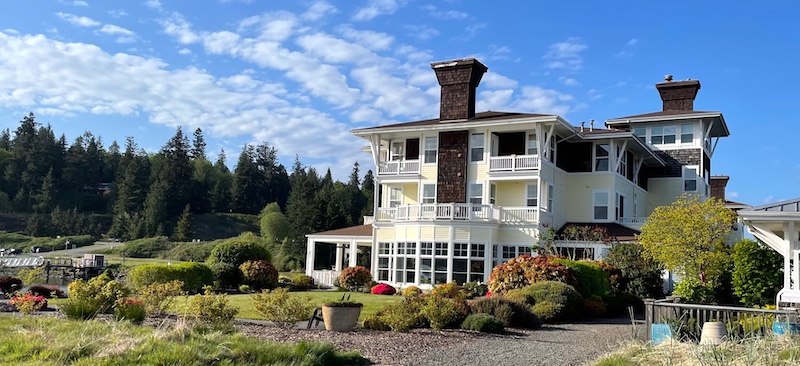
The next day we ventured inland to Lake Quinault, about a 30-minute drive, to check out the eponymous historic lodge on the banks of the large forest-rimmed lake. Built in 1926 in just 53 days, the Lake Quinault Lodge was designed in a rustic architectural style—colloquially referred to as "Parkitecture"—its grand main building sited on a sloping lawn overlooking the shoreline. Inside the lobby's wood-paneled interior, stately old-growth beams and its large stone fireplace are reminiscent of a bygone era of gracious travel, and visitors are encouraged to grab a pint from the lobby bar and sink into one of the sumptuous, oversized leather chairs.
The lake itself was barely visible due to a heavy mist on the day we were there, but we're looking forward to going back when the skies clear—which they do, right? All in all, and despite the rain, it was an ideal three-night getaway to explore a new-to-us part of the Northwest.