Squash Chronicles: A Winter Stew That'll Win a Place in Your Regular Rotation

Whether you call them gourds, squash, or cucurbits—I'll never forget one of the nerdiest (and funniest) quotes from a seed breeders' conference I attended was from legendary seed breeder John Navazio who said, "Cucurbits were bottle-necked a long time ago."*—they are found in nearly every cuisine in the world and seem to have the chameleon-like ability to complement every one of their unique profiles.
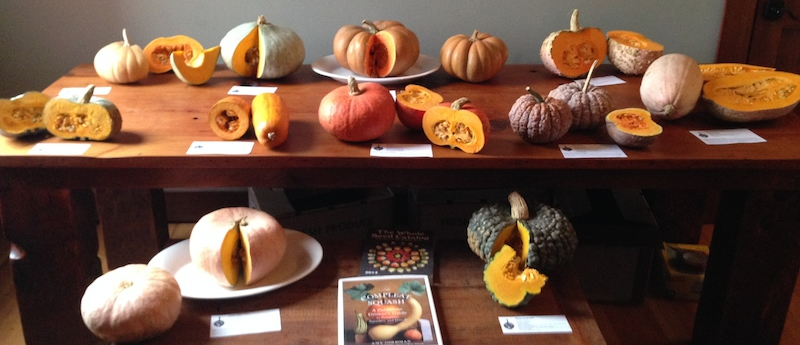
Think squash is just butternut and acorn? Think again…
local farmers are growing a rainbow of new, flavorful varieties!

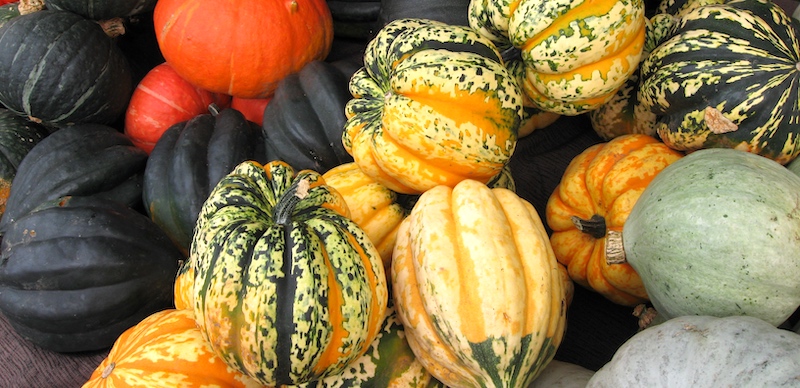
From soups and main dishes to desserts and even sorbets, squash has come a long way from the days when pumpkin, butternut and acorn were the only squashes available at grocery stores. Dull in flavor and overbred, they were nothing like the plethora of varieties now available at local farmers' markets and co-ops and greengrocers, with names like Musquée de Provence, Black Futsu, Kuri and our own Pacific Northwest variety, Lower Salmon River.

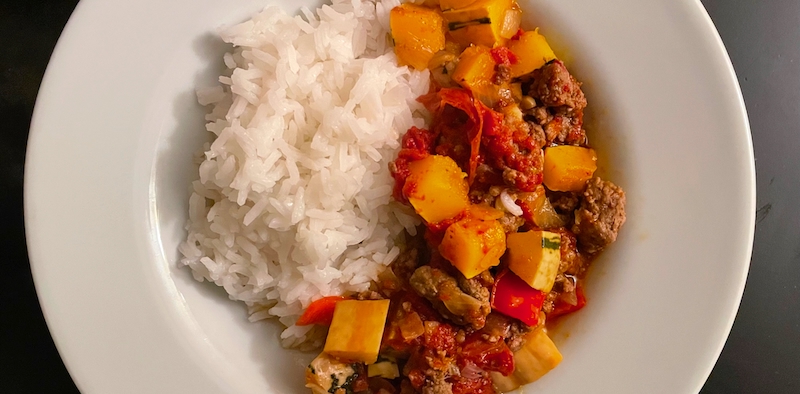
One variety I'm particularly fond of when I need to whip up a quick dinner is delicata squash. There's no need to peel them—the skin is perfectly edible and the colorful dots and stripes on the rind add a pop of color in stir fries and stews—and they cook in less than a half hour, giving a wonderful, tender squash-y texture to the finished dish. I've made the recipe below twice now and it's earning its place in the regular rotation as a warming, spicy winter stew with local pasture-raised ground lamb.

Lamb and Delicata Winter Stew

1 Tbsp. vegetable oil
1 lb. ground lamb
1 med. onion, chopped in 1/4" dice
3 cloves garlic, chopped fine
2 Tbsp. masala mix (I'm loving Diaspora's Biryani Masala)
2 c. roasted tomatoes
2 medium delicata squash, seeded and chopped into 1/2" dice
1/2-1 c. stock or water
2 tsp. fish sauce (optional)
Salt to taste

Heat oil over medium-high heat in Dutch oven or deep skillet. When it shimmers, add ground lamb and sauté until browned, breaking up the lamb into small bits. Add onion and garlic and sauté until tender, then add masala mix and fry briefly. Add tomatoes and chopped delicata, adding stock or water if it seems too dry, but don't drown it…you don't want a soupy stew. Simmer for 20-30 minutes until squash is tender.

While stew simmers, bring water to boil. Add rice; when it comes to a boil, cover and move to a very low burner for 20 minutes or until there's no liquid remaining.

Serve in bowls, ladling stew over rice.

* "Cucurbitaceae is a plant family commonly known as melons, gourds or cucurbits and includes crops like cucumbers, squashes (including pumpkins), luffas, melons and watermelons. The family is predominantly distributed around the tropics, where those with edible fruits were amongst the earliest cultivated plants in both the Old and New Worlds." - Wikipedia
In Season: Gourds, Pumpkins and Squash, Oh My!

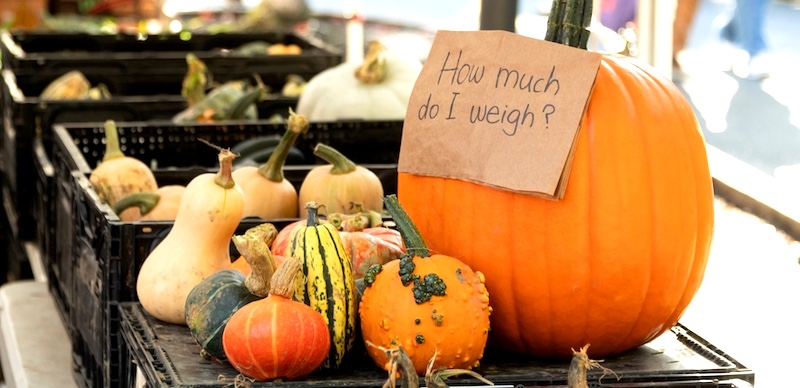
In the spirit of Halloween, it's the ideal time to feature the more than 900 members of the gourd family, or Cucurbitaceae. As Ginger Rapport of the Beaverton Farmers Market wrote in a recent newsletter:

"Although pumpkin, squash, and gourd names are sometimes used interchangeably, it is important to remember that gourds are purely ornamental. Botanically a fruit but culinarily used as a vegetable, winter squash and pumpkins can be decorative and can also be food.

"Because of its very long shelf life, winter squash is a great source of vitamins during the colder months. In our growers’ stalls, you will find plenty of colors, shapes, and sizes to choose from, and each variety has its own personality."

With its easygoing nature—being a breeze to clean and peel, with a sweet, slightly buttery flavor and smooth texture—Butternut squash is one of the most commonly mentioned types and the easiest to find in stores. But venture a bit further afield and you'll discover a world of other varieties to choose from whether you're making soups, curried stews or even desserts.

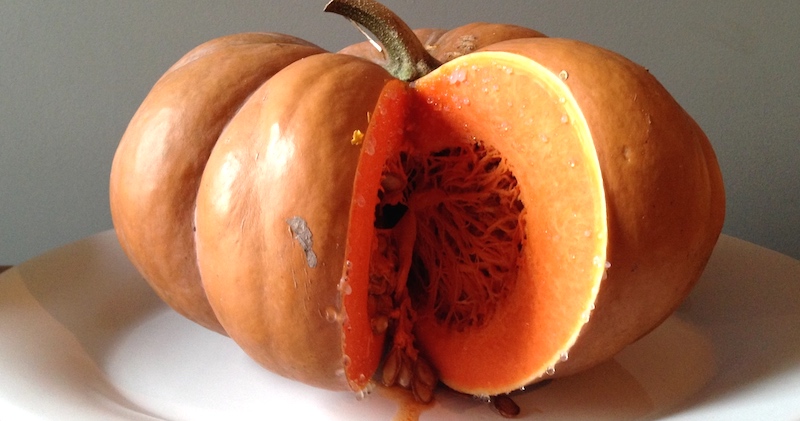
The voluptuous Musquée de Provence.

Just this last week I whipped up a delightful appetizer of fried squash blossoms from a gift of zucchini flowers from Randy Long of Cohesive Farms, a farmer at the Headwaters Farm Incubator in Gresham. Then a hearty dinner of minestrone soup that included colorful delicata squash from my Stoneboat Farm CSA, a squash I'm fond of because of its harlequin coloring and the delightful fact that this variety doesn't require peeling. (Find the recipe below).

Squash seems to be a natural pairing with curry, and the aroma of a curried squash stew simmering on the stove dispels any chill in the wintry air—check out this recipe for curried coconut soup (with or without the accompanying roasted cauliflower).

Winter squash come in a cacophony of colors, textures and flavors.

Squash desserts go far beyond just pumpkin pie—I have fond memories of the squash sorbet that Dave concocted with the roasted flesh of one of my favorite varieties, the voluptuous Musquée de Provence. But if pumpkin pie is your jam, particularly with Thanksgiving looming, ditch the store-bought Libby's and pick up a squash on your next trip to the farmers' market, whether a warty-but-delicious French heirloom Galleux d'Eysine, our own PNW variety the Lower Salmon River, or a more familiar Hubbard. Here's the recipe for Squash (Pumpkin) Pie I make at least a couple of times a season.

So broaden your horizons and give the butternut a rest, whether by picking up a kabocha, black futsu, Gill's Golden Pippin or Koginut. There's a whole world of squash out there to explore!

Winter Minestrone with Delicata Squash

1 onion, diced in 1/2" squares
3 cloves garlic, minced
1 carrot, diced small
2 medium delicata squash, cleaned and diced in 1/2" squares
2 c. diced zucchini
1 qt. roasted tomatoes, breaking up the large chunks with your hands)
8 c. chicken or vegetable stock
2-3 c. cooked cannelini beans (I used cooked pinto beans from Sun Gold Farm)
1-2 c. chopped kale or other greens (optional)
1-2 c. chicken, sausage or meat, shredded (optional)
Salt to taste
Finely grated parmesan, pesto and/or olive oil for serving at the table

Saute onions and garlic for 2-3 min. until golden. Add carrots, saute 2-3 min. (This is the base that Marcella Hazan refers to as soffritto—the raw, diced vegetables are the battuto. The final stage is the insaporire, or sautéing the rest of the vegetables in that base. Who knew?) In any case, add the chopped zucchini and saute for 2-3 min. Then add the rest of the ingredients except for the condiments (for the table) and bring to a boil. Cover, reduce heat and simmer for 2-3 hrs. Serve with parmesan, pesto and/or olive oil.