
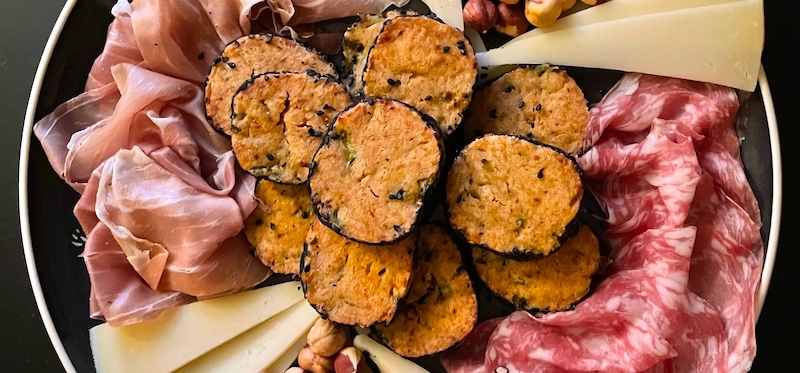
Zingy, Cheesy Crackers for Holiday Charcuterie and Cheese Boards
It was a propitious intersection of two unrelated events. First, we were out of gochujang, a Korean miso and chile paste, and I needed to replenish our supply—we've become intolerant of store-bought varieties that are curiously devoid of texture and have no depth of flavor compared to the homemade version shared by my friend's family. Secondly, Thanksgiving was fast approaching and I needed to pull together a simple appetizer board to offer our guests.
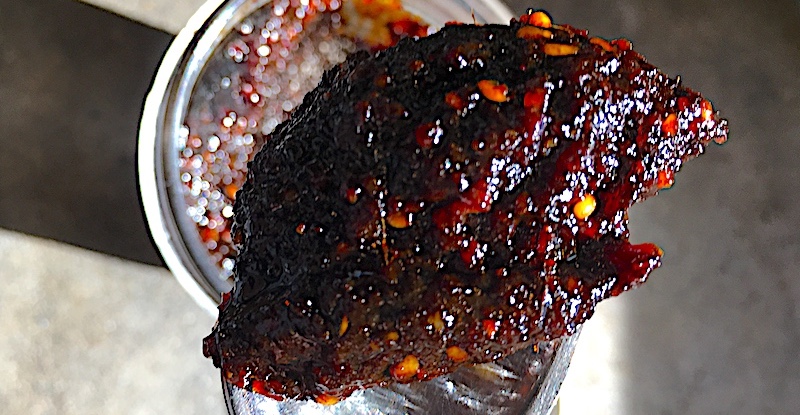
So I jumped in and made up a batch of the gochujang, a simple task as far as gathering ingredients goes, but one that takes a good afternoon of standing over a frying pan and stirring the paste to get it to just the right level of jammy brownness. Fortunately it makes enough to last several months, at least in our household, so it is well worth the time invested
After finishing the gochujang, I turned to the appetizers we needed for the holiday. I'd made some cheesy chile crisp crackers—actually more cookie-like in both size and texture, like French sablés—from a recipe in Dorie Greenspan's xoxo Dorie newsletter. While we love our chile crisp around here, especially her preferred brand, Fly by Jing, I wanted to make Dorie's recipe again, but substituting gochujang for the chile crisp.
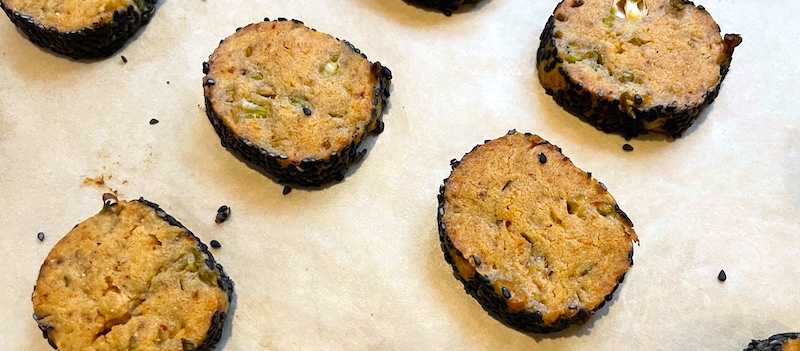
The crackers are a cinch to whip up in the processor, and it's easy to form them into a log and roll it in the sesame seeds on a sheet pan. The rolled log needs to firm up in the fridge, and though I could have sliced and baked it after chilling it for a half hour, I decided to bake it the next day, making it easier to slice.
The gochujang gave the little cookie-like wafers a definite hint of umami from the miso, and the slight zing of heat from the cayenne in the sauce carried through nicely. I can't wait to hear what our guests think!
Zingy Gochujang Cheese Crackers
Adapted from Dorie Greenspan's xoxo Dorie newsletter, adapted from Helen Goh’s "Baking & The Meaning of Life"
2 Tbsp. black sesame seeds (toasted white seeds or a combination are fine, too)
1 c. plus 3 Tbsp. (150 grams) flour
2/3 c. (70 grams) finely grated parmesan cheese
1 tsp. sugar
3/4 tsp. fine sea salt
6 Tbsp.(80 grams) butter, very cold, diced
3 Tbsp.(60 grams) gochujang
1 large egg yolk
1 1/2 tsp. lemon juice
1 1/2 oz. (40 grams) green onion, slivered
Scatter the sesame seeds on a baking sheet and set aside.
In the bowl of a food processor, put the flour, parmesan, sugar, and salt and pulse a few times to combine. Add in the diced butter, processing until the mixture is crumbly. Add in the gochujang, egg yolk, and lemon juice, pulsing until it just begins to clump up (Dorie says it should resemble wet sand), then put the mixture into a large bowl and add the green onion, stirring to combine, then press it into a ball.
Place on a board or butcher block, and form the dough into a round log about 10 inches (25 cm) long and 1½ inches (4 cm) in diameter. Carefully place the log on the sheet with the sesame seeds, then roll it until it's covered in the seeds (press extra seeds into any bare patches). Wrap it in plastic wrap and refrigerate for 30 minutes.
Take it out of the fridge and leave it wrapped, rolling it into a more even log if necessary. (At this point you keep it tightly wrapped in the freezer for up to one month; no need to defrost before cutting and baking.)
Preheat the oven to 350° and line a baking sheet with parchment paper.
Slice the log crosswise into coins 3/8" thick and place them on the lined baking sheet, pressing them back into shape if they break. Bake 20 minutes until barely browned on the top. Dorie notes "the bottoms of the crackers will be a deeper reddish-brown from the gochujang as well as the direct contact with the heat of the sheet—this is as it should be."
Soft when warm, they'll crisp up as they cool. It's difficult not to eat them right then and there, but Dorie says they are at their best a day of two later, "when they’ve dried out a little and the flavors have had time to meld together. They will keep, loosely wrapped in foil, for up to 5 days."
 Fortunately, so far we have only experienced about an hour without power, though I've been forcing Dave to grind coffee in the electric grinder before we go to bed at night, just in case. Yesterday was Valentine's day, and Dave spent it smoking one of his signature briskets, as well as making a
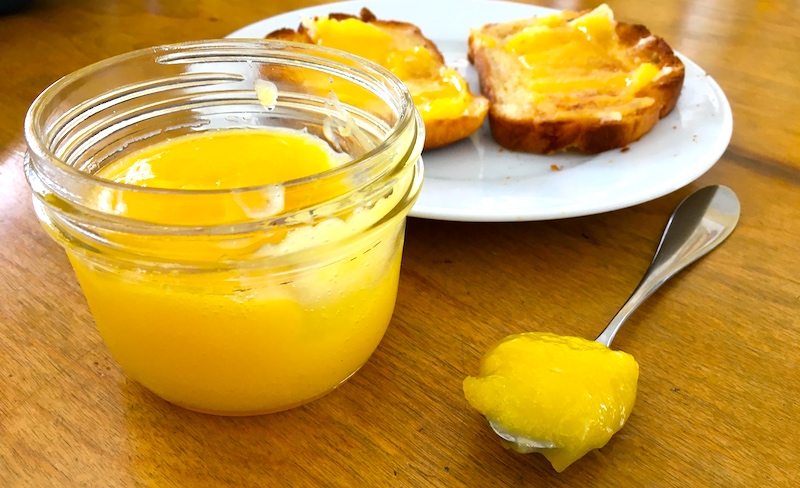
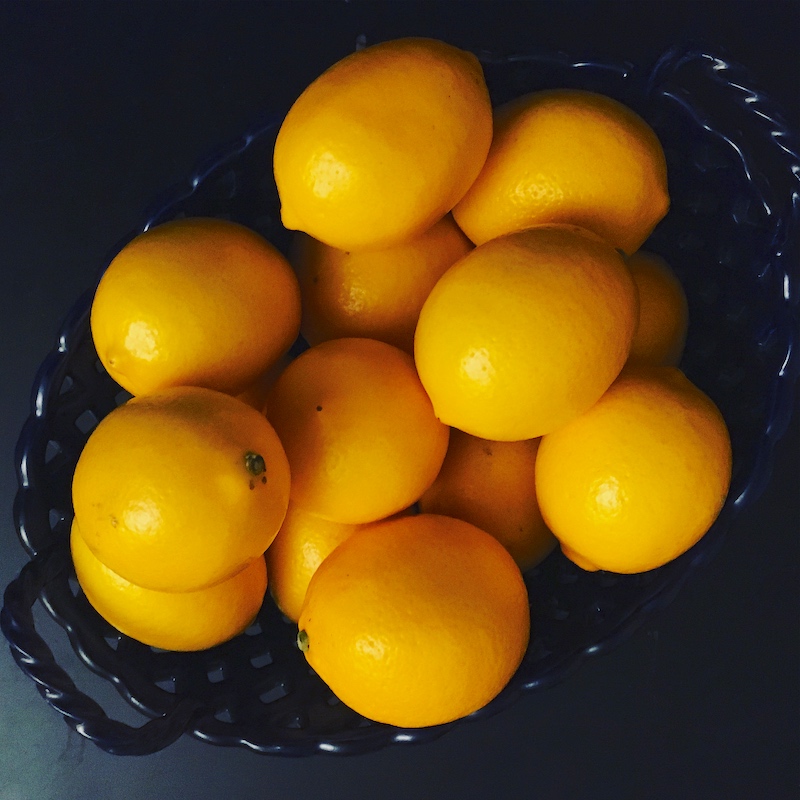
  I set about searching for an easy, simple recipe for curd and ran across one by